
Discover why this authentic Zen monastery near Da Lat is completely different from every other temple in Southeast Asia. Truc Lâm Zen Monastery isn’t the temple you think you’re getting when you book a Southeast Asia trip. And I’m talking about the entire experience here, not just the architecture, but everything surrounding it. If temples don’t interest you anymore, or you feel like you’ve seen too many and they all start to blur together, don’t make the mistake of ignoring this place.
In this article, I’m taking you beyond the typical tourist experience. We start by understanding what makes Truc Lâm Zen Monastery near Da Lat fundamentally different from the temples you’ve seen before. You can find more content about this lovely place and my experience on Instagram, TikTok or Youtube.

Getting There: The Road to Da Lat
Important note: The airport in Da Lat is currently closed and is expected to reopen in a few months. At the moment, you cannot fly directly there. Because Da Lat is located in a mountainous region of Vietnam, access is mainly via winding roads and mountain passes that aren’t for everyone.
You can get here by car or bus, and the views along the way are absolutely beautiful. But for those who get motion sickness, this journey can be quite challenging, which is also one of the reasons why fewer tourists make it here.
The Best Route: You can take a bus from Nha Trang, a coastal city with an airport. The ride takes about 3 to 4 hours to Da Lat, depending on traffic. The journey itself is part of the experience. As you climb into the mountains, you’ll notice the temperature dropping, the vegetation changing, and the air becoming clearer. By the time you reach Da Lat, you’ve already left lowland Southeast Asia behind.
If you want a deep dive into Da Lat itself, I have other resources breaking that down. But today, we’re going straight to why this monastery matters and why it’s an irreplaceable travel experience and, in many ways, a life experience.
Watch video from Truc Lâm Zen Monastery
The Problem With Most Temples in Southeast Asia
Here’s what I’ve learned after visiting dozens of temples across Southeast Asia: many of them feel hollow. They’ve transformed into tourist machinery. The incense is there. The golden Buddhas are there. But the actual spiritual substance? It’s been diluted down to almost nothing.
Too many temples have become monuments to commercialization rather than centers for genuine spiritual practice. They’re optimized for Instagram photos. They’re designed for quick visits. They’re structured around donation boxes and gift shops. The authenticity that should define a spiritual space has been replaced with carefully curated experiences designed to separate tourists from their money.
Truc Lâm Zen Monastery is very different. Even if you’re an atheist, this place will capture your attention and touch your heart.
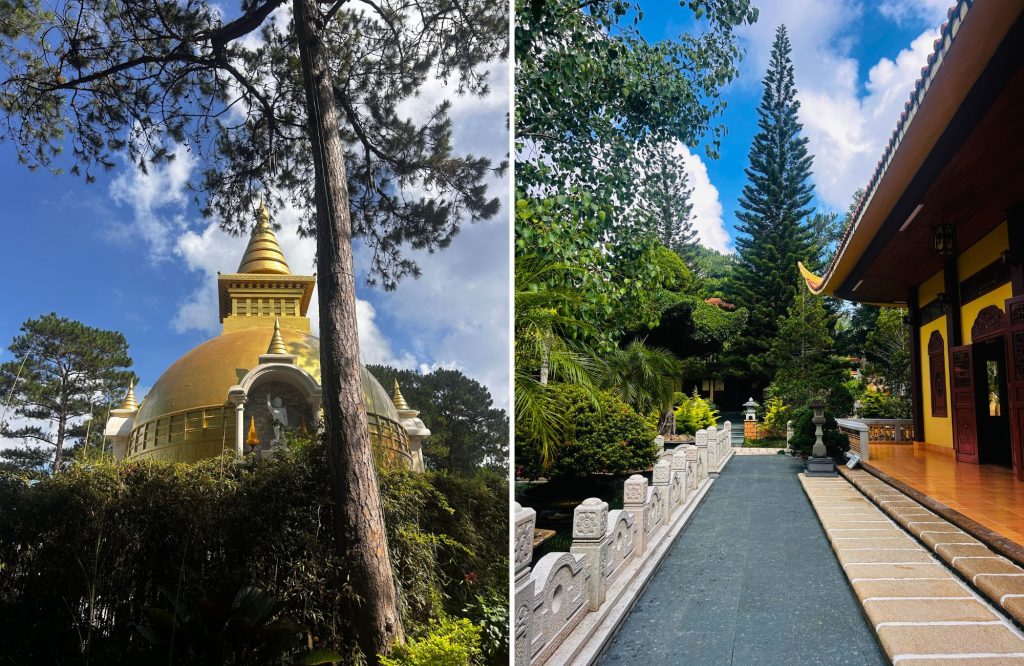
What Makes Truc Lâm Different: Authenticity Over Commercialization
This is an active Zen Buddhist monastery run by a living, breathing community of monks who meditate, study, and practice daily. This isn’t a museum pretending to be spiritual. This isn’t a historical site masquerading as a place of practice. These are real practitioners, this is their home, practice and life.
The distinction is crucial. When you visit Truc Lâm, you’re not an observer in a carefully curated tourist experience. You’re a guest in a working monastery. Yes, they welcome visitors, but they’re not catering to you. They’re living their practice, and you get to be adjacent to that.
Do you want more travel tips and travel the world with a joy and confidence? Check my e-Book or feel free to send me a message.

The History and Founding of Truc Lâm Zen Monastery
The monastery was founded in 1993 on a mountainous area at approximately 1,500 meters elevation. That elevation matters. It puts you above the clouds,literally and figuratively.
The air and energy are different up there. You’re not in lowland Southeast Asia anymore. You’re in a completely different climate zone with forests, morning mist, and a silence that most modern people have forgotten exists.
The monastery was built during Vietnam’s period of economic opening, when many traditions were being revived after decades of suppression. Truc Lâm represents a return to authentic Zen Buddhist practice in Vietnam, grounded in the philosophy of the Thien (Zen) tradition that has deep roots in Vietnamese Buddhism.
Architecture That Reflects Genuine Zen Principles
The architecture here reflects authentic Zen principles. It’s minimalist without being sterile. There are elements of Vietnamese design integrated with genuine Zen aesthetics. The buildings don’t shout for attention, they’re humble and functional.
The Forest: Nature as Spiritual Teacher
The surrounding forest is equally important. We’re talking about ancient woodland that hasn’t been converted into resort property or cleared for development. The trails around the monastery wind through what feels like untouched nature. That’s remarkable for Vietnam, where development pressure is intense.
This is highland forest, different from the lowland jungles most tourists experience. You’ll find rhododendrons, ancient trees, natural streams, and an ecosystem that feels genuinely wild..

Why This Monastery Is Worth Your Time
Reason 1: Authenticity
You’re not an observer in a carefully curated experience. You’re a guest in a working monastery. The monks aren’t performing spirituality for your benefit. They’re practicing it. You get to witness that, to be adjacent to it, to absorb it simply by being present.
Reason 2: The Physical and Spiritual Experience
The elevation, the forest, the architecture, the silence, these create a sensory environment that few other places in Vietnam offer. If you’ve been to crowded beaches or bustling cities, Truc Lâm feels like you’ve stepped into another country entirely.
The air quality alone is worth the trip if you’re coming from a city. The silence is worth the journey. The way your nervous system responds to this environment is worth paying attention to.
Reason 3: Accessibility Without Compromise
Unlike some Zen monasteries that restrict visitors or require advance permission, Truc Lâm has specific visiting hours and welcomes guests respectfully. You can walk the grounds, sit in the meditation hall if appropriate, and observe the daily rhythm of monastic life, without compromising the monks‘ practice.
What You Can Do at Truc Lâm Zen Monastery
Meditation Sessions
Some visiting hours allow you to participate in group meditation. Even if you’ve never meditated before, the environment itself teaches you. Thirty minutes in that silence, surrounded by the sounds of forest and bells, does something to your nervous system that you can’t replicate in a city.
Forest Walks and Nature Immersion
The trails around the monastery are extraordinary. You’re walking through Vietnamese highland forest. The paths wind through rhododendrons, past ancient trees, alongside natural streams. The air quality alone is worth the experience.
These aren’t manicured tourist trails. They’re the actual paths that monks use for their walking meditation practice. When you walk them, you’re following in the footsteps of practitioners who have been coming this way for decades.
Temple and Pagoda Exploration
You can tour the main halls, the pagodas, the bell tower. Unlike many temples that rope off interior spaces and charge extra fees, Truc Lâm is more open in its approach. You’re free to move through most spaces respectfully.
Pay attention to the details. The way the light comes through the windows. The simple beauty of the altar spaces. The way the architecture frames the forest outside.
The Sunrise Experience
A sunrise visit here is truly transformative. I did it every day during my time in Da Lat, and I genuinely think it’s the best part of the day at the monastery.
No tourists. No crowds. Just the monks and you. The mist rises from the valleys below. The light breaks through the trees in slow, golden waves. The birds wake up. The entire landscape comes alive.
If you have the opportunity, prioritize a sunrise visit. It’s the closest you’ll get to understanding what drew people to build a monastery in this location in the first place.
Personal Practice Spaces
You can meditate, pray, do breathwork exercises. In the forest, you can practice Qigong or any kind of workout you like. The open spaces are available for your own practice.
Creative Inspiration
This place is perfect for creative work. If you’re a writer, artist, or musician, this is the kind of environment where inspiration definitely kicks in. There are plenty of benches and beautiful shelters where you can set up and work.
The quality of silence here actually enhances creativity. It removes the constant background noise that modern life has conditioned us to accept, and suddenly your mind has space to think, imagine, and create.
Picnicking and Leisure
There are plenty of benches and beautiful shelters where you can set up a picnic. Bring food and simply sit with the forest. The experience of eating in silence, surrounded by nature, is meditation in itself.
If you’re planning a trip to Da Lat, this place should definitely be on your itinerary. 👇
The Routes and Surrounding Experiences
Two Ways to Reach the Monastery
The Main Entrance Route: This is the most direct path. You ascend toward the monastery through the primary entrance, taking in the architecture and spiritual atmosphere as you approach.
The Forest Route: This is more physical, almost a mini workout. You climb stairs and walk through the forest. This route is particularly rewarding because the gradual ascent through nature prepares your mind and body for the spiritual experience ahead.
This path leads down to a beautiful lake where you can take a boat ride and simply enjoy the views. Walks around the lake are peaceful, and along the way you’ll find small cafés with terraces, as well as local vendors selling strawberries.
A Strategic Suggestion: Make this a longer walk around the entire area and treat the monastery as your final destination. This works beautifully because the monastery naturally fits into the route back toward the city. You get multiple experiences in one outing: the lake, the forest walks, the cafés, and then the monastery.
Food and Supplies
If you’re not tempted by strawberries or the local cafés, which honestly aren’t many and aren’t always open, just bring your own food and have a picnic by the lake or somewhere in the surrounding forest.
Practical Information for Your Visit
What to Bring
- Comfortable, respectful clothing (shoulders and knees covered)
- Water and snacks
- A notebook if you’re a writer or reflective person
- Sturdy walking shoes for forest trails
- A light jacket, even in warm seasons, the elevation means cooler temperatures
Photography Etiquette
The monastery welcomes photography in most areas, but be respectful. Don’t photograph monks during their practice without permission. The goal is to experience the place, not just document it.
Getting There from Da Lat
The monastery is located just 5km from Da Lat, accessible by bike taxi, car, or tour guide. The ride itself is beautiful, winding through Da Lat’s streets and into the mountain areas.
How Long to Spend
You could rush through in an hour, but the real value emerges with time. Spend 3-4 hours minimum. Ideally, visit during early morning, stay through mid-morning, and let the experience sink in rather than rushing through checklist-style.
So if you’re planning a Vietnam trip and you want to go beyond the standard beach-city-market circuit, Truc Lâm Zen Monastery near Da Lat is non-negotiable. You can find more information, photos and videos from Da Lat on my Instagram, TikTok and Youtube. If you have any questions, feel free to send me a message or e-mail.
Pridaj komentár